How a Porta Potty Works, From Tank to Treatment Plant
How does a porta potty work? A sealed tank, a deodorizer, a vent pipe and a weekly pump-out do all the work, with no water or sewer hookup.
Live answer Mon–Sat 7 AM–7 PM. Phone quotes take about 5 minutes.
What is inside a porta potty?
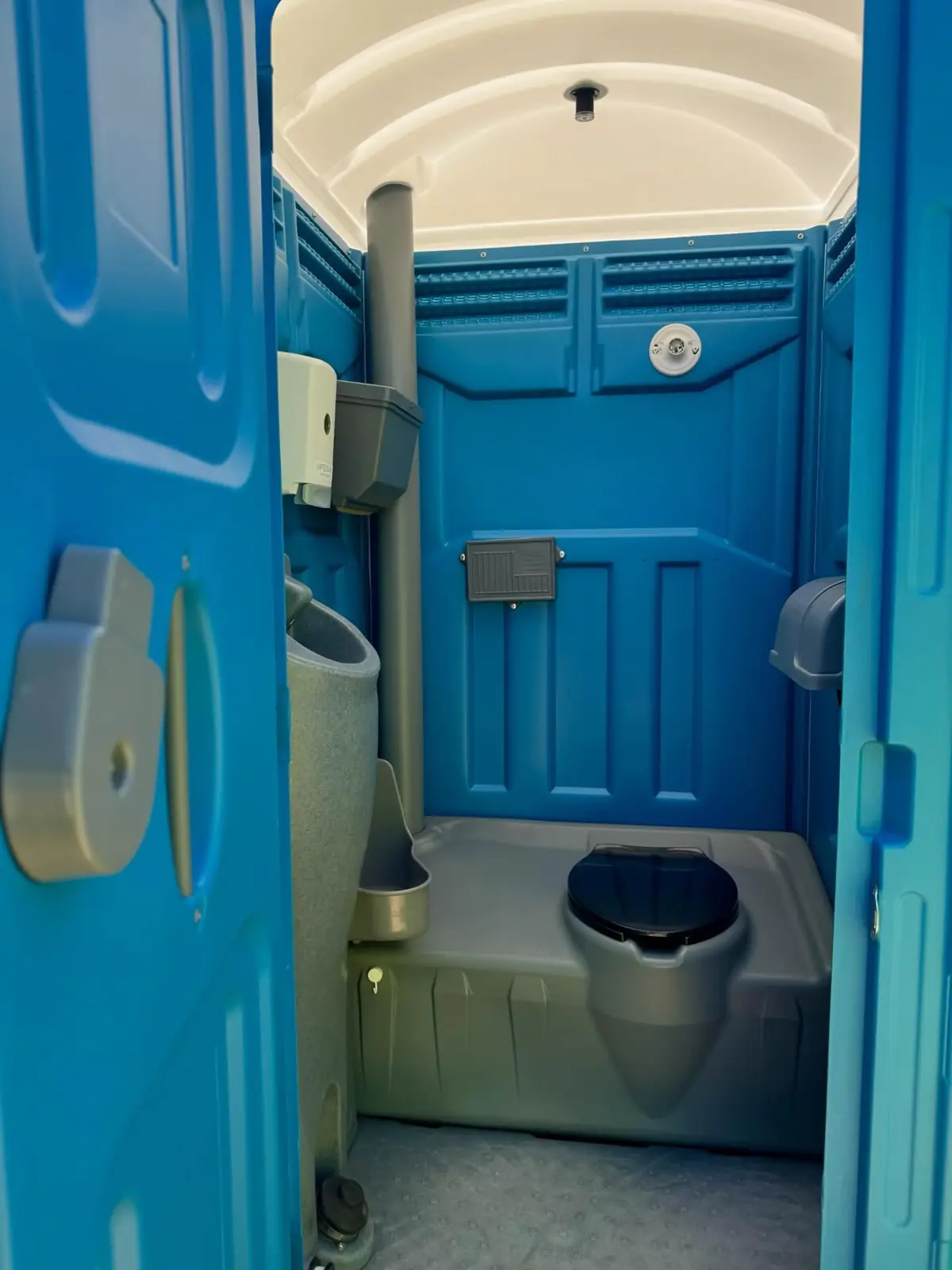
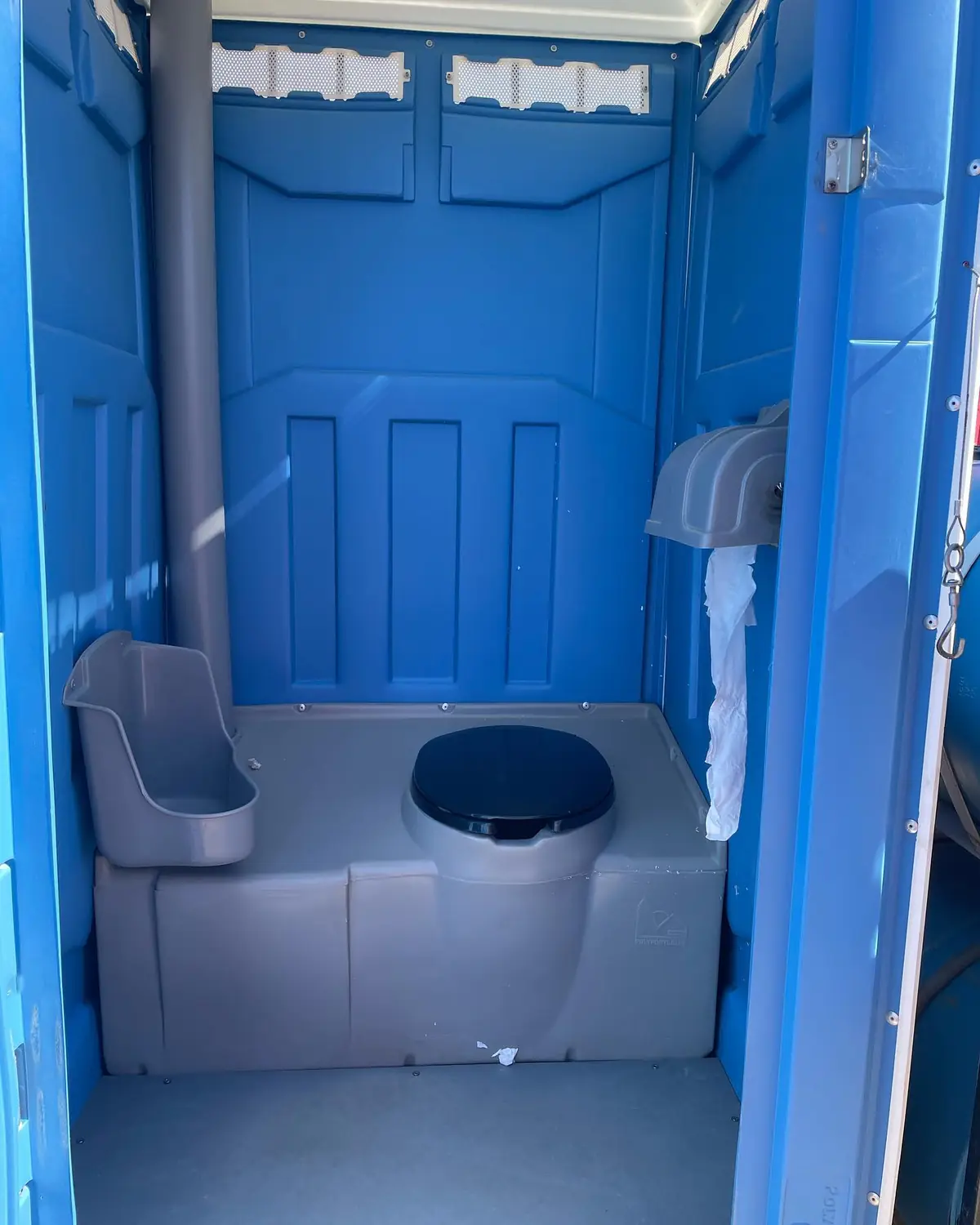
A standard porta potty has a toilet seat over a sealed holding tank of about 60 gallons, a urinal, a 2-roll toilet paper holder, a hand sanitizer dispenser and a vent stack. A translucent roof lets in daylight, and an occupancy latch shows red or green on the door.
A typical unit is about 44 inches wide, 48 inches deep and 90 inches tall. It weighs about 175 pounds empty.
- Width
- about 44 in.
- Depth
- about 48 in.
- Height
- about 90 in.
- Empty weight
- about 175 lb
- Waste tank
- about 60 gal
- Uses between services
- about 200
There is no water line, sewer line or power cord. Everything stays inside the unit until the service truck comes.
What is the blue liquid in a porta potty?
The blue liquid in a porta potty tank is a deodorizer. The deodorizer covers odor, slows the bacteria that make smell, and tints the tank so the contents are hard to see. Our crew adds a fresh charge at delivery and at every service visit.
Heat uses up the deodorizer faster. In a Florence summer, busy units do better with two visits a week.
Don't add your own cleaners. Bleach and household products can work against the deodorizer.
How does the vent stack work?
The vent stack is a pipe that runs from the top of the holding tank up through the roof of the porta potty. Sun warms the pipe, the warm air rises, and the draft pulls odor out of the tank and away from the user. Keep the roof uncovered so the vent stack works.
The translucent roof helps in a second way. It brings in light without a window, so the unit isn't dark inside during the day.
Where does the urinal drain?
The urinal in a standard porta potty drains into the same holding tank as the toilet. A separate urinal cuts down on splash and keeps the seat cleaner for the next person. A standard unit has 1 seat and 1 urinal, which is how OSHA counts toilets on a jobsite.
That count matters for crews. Our sizing guide shows the full OSHA table and the event method.
How does a flushing porta potty work?
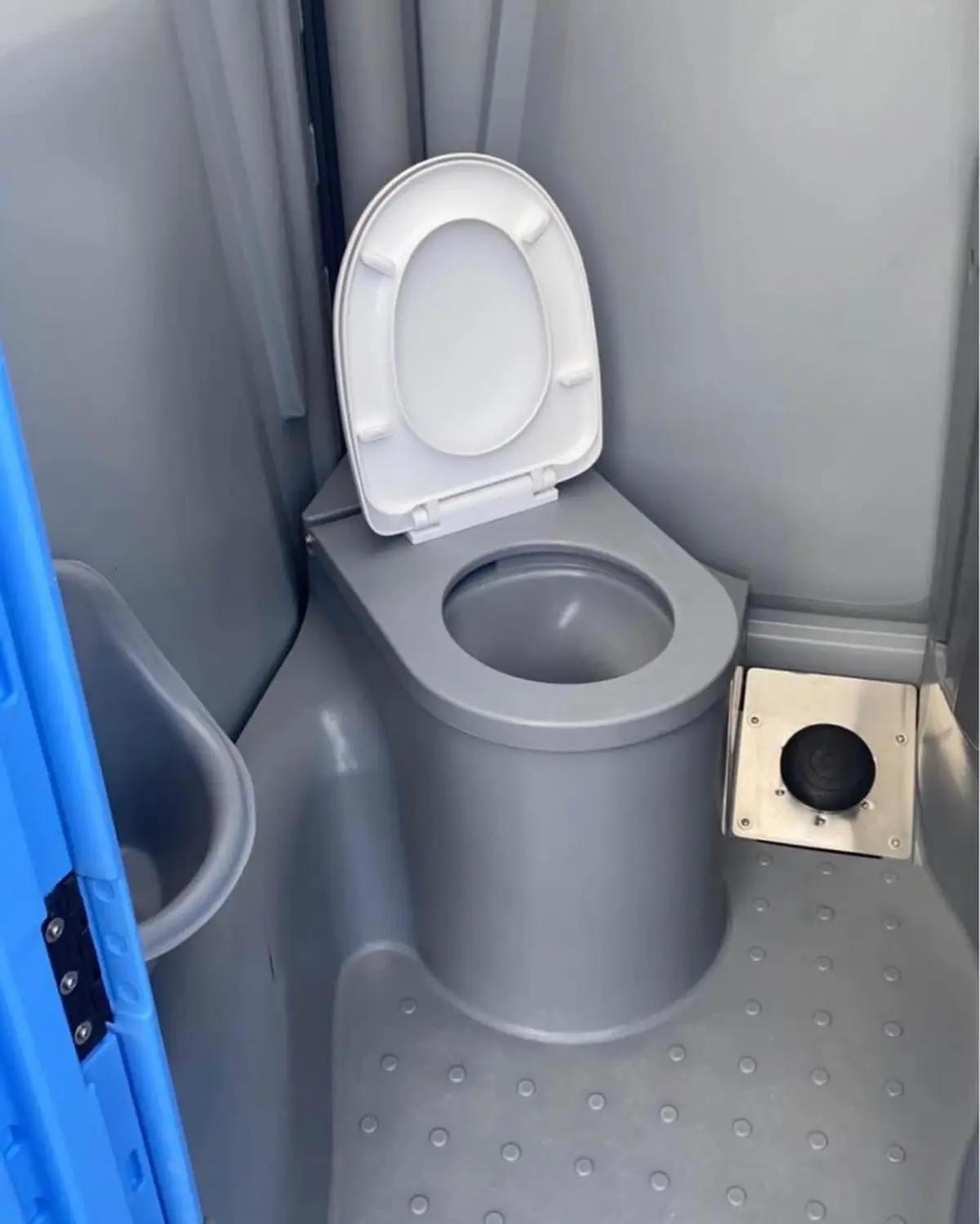
A flushing porta potty has a foot pump that sends fresh water from a separate tank of about 15 gallons to rinse the bowl. The rinse pushes waste into the holding tank below and leaves a clean bowl to look at. Some other designs recirculate treated tank liquid instead of fresh water.
Our deluxe flushing units use the fresh-water rinse and add a foot-pump sink. Neither needs a hose or a power cord.
See both models on the deluxe porta potty page. For bigger groups, a separate hand wash station has 2 sinks and about 30 gallons of fresh water.
Not sure which model you need?
Tell us the use and headcount, and we will match the unit on the call.
(843) 268-6817Live answer Mon–Sat 7 AM–7 PM.
How does the pump truck clean a porta potty?
The pump truck has a vacuum tank and a long hose. On each service visit, the driver pumps the holding tank empty, washes down the inside, adds fresh deodorizer, and restocks toilet paper and sanitizer. Sink units also get a fresh water refill. A long-term rental gets this visit once a week.
The whole visit takes a few minutes per unit. The truck needs to park within hose reach, so keep that path clear.
We also pump customer-owned portable toilets and RV holding tanks. See RV and camper pump-out for details.
Where does porta potty waste go?
Porta potty waste goes in a sealed pump truck to a state-approved disposal facility, usually a permitted wastewater treatment plant. South Carolina requires a license to clean self-contained toilets and allows septage disposal only at facilities the state approves. Nothing goes on the ground or into a ditch.
At the plant, the waste is treated the same way as sewage from homes. Clean water leaves the plant after treatment.
The rule is in South Carolina Regulation 61-56.1. Weekly visits on long-term rentals keep the tank from filling past its limit.
How porta potties work: questions
Can a porta potty leak on my lawn?
The holding tank is sealed and doesn't drain into the ground. Leaks come from a unit that is set on a steep slope or tipped over. Our crew sets each unit level, and weekly service keeps the tank from overfilling.
Does a flushing porta potty need a water hookup?
A deluxe flushing unit carries its own fresh water, about 15 gallons, so it needs no hose or power. A deluxe flushing unit starts at $325 for an event of up to 7 days.
Is there a light inside a porta potty at night?
A standard unit has no electric light. The translucent roof lights it during the day. For evening events, our VIP flushing cabin and restroom trailers have interior lights.
How often does a porta potty need to be emptied?
A standard unit has about a 60-gallon tank, rated near 200 uses between services. On a jobsite that works out to one pump-out a week for about 10 workers on a 40-hour week. Busier units or hot summer weeks may need a second visit, which costs $65.
How heavy is a full porta potty?
A standard unit weighs about 175 pounds empty. A full tank adds several hundred pounds, which is why a unit should never be moved by hand once it is in use.
Pick the right unit for your job
Tell us how many people and how long. You get the full itemized price on the call.
(843) 268-6817Live answer Mon–Sat 7 AM–7 PM.